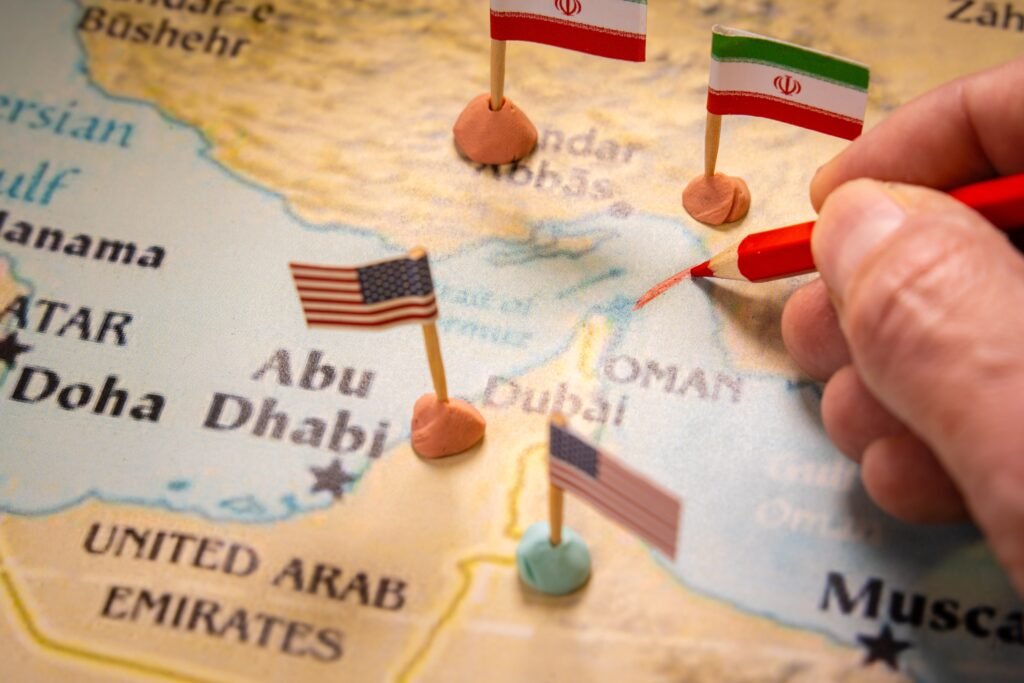
The current global landscape is shaped by intensifying competition among major powers, alongside a broader fragmentation of alliances and growing contestation over trade, technology, and strategic resources. This competition is currently most visible in rising tensions in the Persian Gulf, a development that presents Canada with both opportunities and risks.
From a broader perspective, the conflict between the United States and Iran may draw increased attention to the strategic value of Canada’s natural resources on the global stage. With approximately 20% of global oil and LNG shipments passing through the Strait of Hormuz, any disruption could significantly constrain global supply.
With this circumstance, Canadian energy producers may benefit from elevated revenues. More importantly, this environment may create an incentive to accelerate pipeline expansion toward non-U.S. markets, thereby enhancing long-term economic flexibility. Recent developments appear to support this shift. The Trans Mountain Expansion is reportedly operating at full capacity to meet strong demand from Asian markets.
In addition, on March 23, 2026, Danielle Smith, Premier of Alberta, indicated that Middle Eastern and Asian sovereign wealth funds are exploring minority investments in a new crude oil pipeline. Taken together, these developments suggest that Canada is seeking to strengthen its access to Asian markets, while also laying the groundwork for potential future capacity directed toward European markets. However, as the deadline nears for meeting core milestones in the Ottawa-Alberta memorandum on a new oil pipeline to the British Columbia coast, two sticking points remain: bringing Alberta’s carbon price in line with the federal benchmark and finalizing the Pathways Alliance emissions reduction project.
Beyond energy, the Gulf region is a key supplier of critical inputs, including urea, ammonia, and sulfur for fertilizer production, as well as helium used in semiconductor manufacturing. Disruptions across these sectors would constrain global supply and increase dependence on alternative producers. In this context, the United States would likely turn more heavily toward Canadian potash, nitrogen, and helium. At the same time, such disruptions could create an opportunity for Canada not only to meet rising North American demand but also to expand output and diversify exports toward non-U.S. markets. In light of the 2026 CUSMA review, this shift may serve to strengthen Ottawa’s negotiating position.
With regard to the defence sector, heightened tensions in the Gulf may create opportunities for Canada. Although Ottawa’s direct military role remains limited, and its presence in Iraq has been reduced, Defence Minister David McGuinty has indicated that Ottawa is considering “appropriate efforts” to ensure safe passage in the Gulf and support regional allies. In this context, increased insecurity has the potential to sustain demand for defence products among established partners such as Saudi Arabia and Turkey, reinforcing Canada’s position as a supplier. The expansion of defence exports also aligns with Canada’s broader industrial objectives, as highlighted in the Defence Industrial Strategy. You can read our analysis of the strategy here.
However, these gains are not without domestic costs. Escalation between the United States and Iran could trigger a “war inflation” scenario in Canada, characterized by rising energy and fertilizer prices. This would erode household purchasing power and increase the risk of a domestic recession, even as the resource sector and the broader economy may experience benefits. Accordingly, any attempt by Ottawa to secure concessions from Washington must therefore account for these pressures. A successful negotiation would involve trading guaranteed resource flows for the permanent removal of tariffs, positioning Canadian exports as a mitigating “shield” against global price shocks.
To navigate this environment, Canada should adopt a strategically coherent foreign policy. Consistency is essential for sustaining investor confidence amid geopolitical volatility. Policymakers should assume that the current conflict in the Gulf could evolve into a war of attrition, spanning both conventional and gray-zone domains. More broadly, escalation in the Gulf should be understood not as an isolated crisis but as a recurring manifestation of systemic rivalry between the United States and the CRINK bloc. Trade disruption is therefore structural, not exceptional.
In this context, Canadian businesses must shift from a reactive posture to one grounded in proactive risk management. The advantage will go to those who act decisively – locking in partnerships, expanding into new markets, and building resilience into their operations.